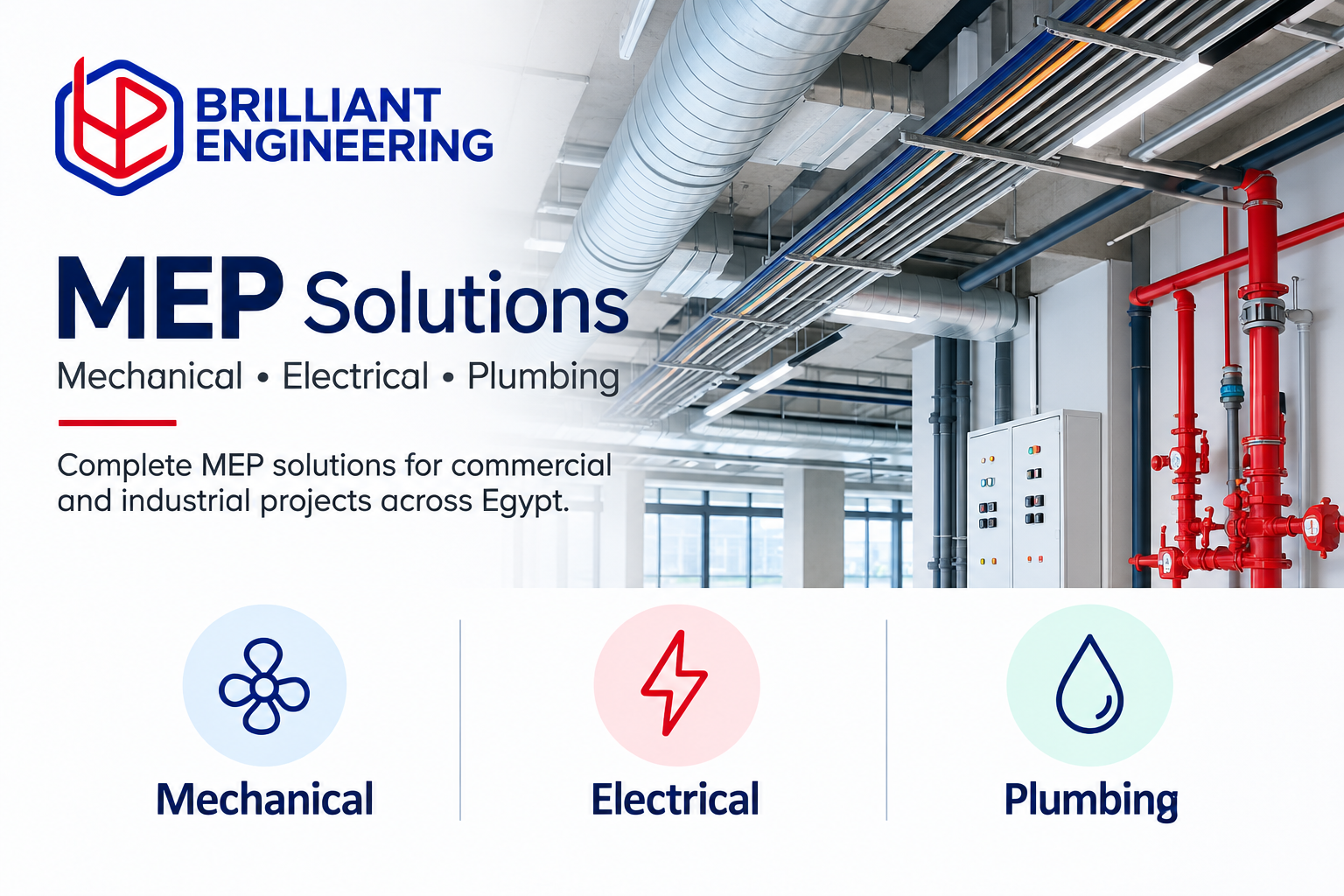
MEP stands for Mechanical, Electrical, and Plumbing — the three core engineering systems that make any building functional, safe, and comfortable. Without a properly designed MEP system, no building can operate efficiently, regardless of how well it is architecturally designed.
At Brilliant Engineering, we have delivered complete MEP solutions across dozens of commercial and industrial projects in Egypt, covering everything from HVAC and ventilation to electrical installations, plumbing, firefighting, and control systems.
What Does MEP Stand For?
M — Mechanical: All systems related to heating, ventilation, air conditioning (HVAC), and air quality control. This includes ducted air systems, chillers, air handling units, and evaporative coolers.
E — Electrical: All power distribution systems, lighting, control panels, cable trays, earthing, and automation systems that supply and manage electrical power throughout a building.
P — Plumbing: All water supply, drainage, sanitary systems, hot water systems, and fire suppression systems that manage water flow in and out of the building.
Together, these three systems form the backbone of any building — from a small office to a large industrial facility.
Why Are MEP Systems Important?
A building without properly designed MEP systems faces serious problems:
Safety Risks: Faulty electrical systems cause fires. Poor plumbing causes flooding and contamination. Inadequate ventilation leads to air quality problems and health hazards.
High Operating Costs: Inefficient MEP systems waste enormous amounts of energy — sometimes up to 40% more than properly designed systems. This directly increases electricity and water bills.
Regulatory Non-Compliance: Egyptian building codes and fire safety regulations require proper MEP systems in all commercial and industrial buildings. Non-compliance leads to project delays and legal issues.
Reduced Building Value: Buildings with poor MEP systems are harder to sell, rent, or insure, and require costly retrofits later.
Operational Disruptions: MEP failures cause unexpected downtime in factories, hospitals, hotels, and offices — with significant financial consequences.
The Components of a Complete MEP System
Mechanical Systems (M)
Mechanical engineering covers all systems that move air, heat, or cool a building:
- HVAC Systems — heating, ventilation, and air conditioning for indoor comfort
- Ducted Air Distribution — ductwork networks that carry conditioned air throughout the building
- Evaporative Cooling Systems — energy-efficient cooling ideal for Egypt's hot, dry climate
- Exhaust and Fresh Air Systems — continuous air exchange to maintain air quality
- Fire-Rated Smoke Extraction — life-safety systems that extract smoke in emergencies
Electrical Systems (E)
Electrical engineering covers all power and control systems:
- Medium and Low Voltage Distribution — safe delivery of electrical power throughout the building
- Control Panels — centralized panels that manage and protect electrical circuits
- Lighting Systems — efficient lighting design for workspaces, emergency, and outdoor areas
- Cable Management Systems — organized cable trays and conduits for safe wiring
- Earthing and Lightning Protection — protecting equipment and people from electrical faults
- Building Automation Systems (BAS) — smart control of all building systems from one platform
Plumbing Systems (P)
Plumbing engineering covers all water-related systems:
- Cold and Hot Water Supply — reliable water distribution throughout the building
- Drainage and Sewage Systems — safe removal of wastewater
- Firefighting Systems — fire sprinklers, hydrants, and suppression systems that meet civil defense requirements
- Specialized Systems — compressed air, medical gases, and industrial water treatment where required
How MEP Systems Are Designed
A proper MEP design process follows a structured methodology:
Step 1 — Requirements Analysis: Understanding the building's function, occupancy, and operational requirements. A hospital has very different MEP needs from a warehouse or a factory.
Step 2 — Engineering Calculations: Calculating electrical loads, water demands, air volumes, and system capacities based on international engineering standards.
Step 3 — Shop Drawings and Technical Submittals: Preparing detailed drawings, equipment schedules, and technical submittals for client, consultant, and authority approvals.
Step 4 — Procurement: Sourcing and supplying equipment that meets the approved specifications — from control panels and cable trays to HVAC units and plumbing fixtures.
Step 5 — Installation: Expert installation teams implement all systems according to approved drawings, with continuous quality checks.
Step 6 — Testing and Commissioning: Every system is tested, balanced, and commissioned before handover. Load tests, flow tests, and functional tests confirm that everything operates to specification.
Step 7 — Handover and Documentation: Full as-built drawings, operation manuals, warranties, and maintenance schedules are delivered to the client.
MEP Applications Across Industries
MEP systems are essential in every type of building:
Commercial Office Buildings: Centralized HVAC, structured cabling, electrical distribution, and plumbing systems designed for comfort and energy efficiency.
Industrial Factories and Warehouses: Heavy-duty electrical systems, industrial ventilation, compressed air, and fire suppression systems that meet production and safety requirements.
Hospitals and Healthcare Facilities: Highly specialized MEP systems including medical gas, sterile ventilation, emergency power, and infection-control plumbing.
Hotels and Hospitality: Integrated MEP systems delivering guest comfort, energy efficiency, and operational reliability across all areas.
Shopping Malls and Retail: Large-scale centralized MEP systems managing comfort, lighting, fire safety, and utilities for thousands of daily visitors.
Educational Facilities: MEP systems that create healthy, comfortable, and energy-efficient learning environments.
Data Centers: Precision cooling, redundant electrical systems, and fire suppression designed for 24/7 critical operations.
The Cost of Poor MEP Design
Many building owners underestimate the cost of cutting corners on MEP design. Common consequences include:
- Emergency repairs costing 5-10 times more than proper installation
- Energy bills 30-40% higher than necessary due to inefficient systems
- Business interruptions worth far more than the cost of the MEP system itself
- Failed building inspections and regulatory penalties
- Difficulty obtaining insurance or financing for poorly built facilities
Investing in proper MEP engineering from the start is always more economical than retrofitting or repairing inadequate systems later.
Why Choose Brilliant Engineering for Your MEP Project?
Brilliant Engineering is one of Egypt's most experienced MEP contractors, with a proven track record across commercial, industrial, and specialized facilities.
Our MEP capabilities cover the full scope:
- Air Conditioning and HVAC — 25+ completed projects
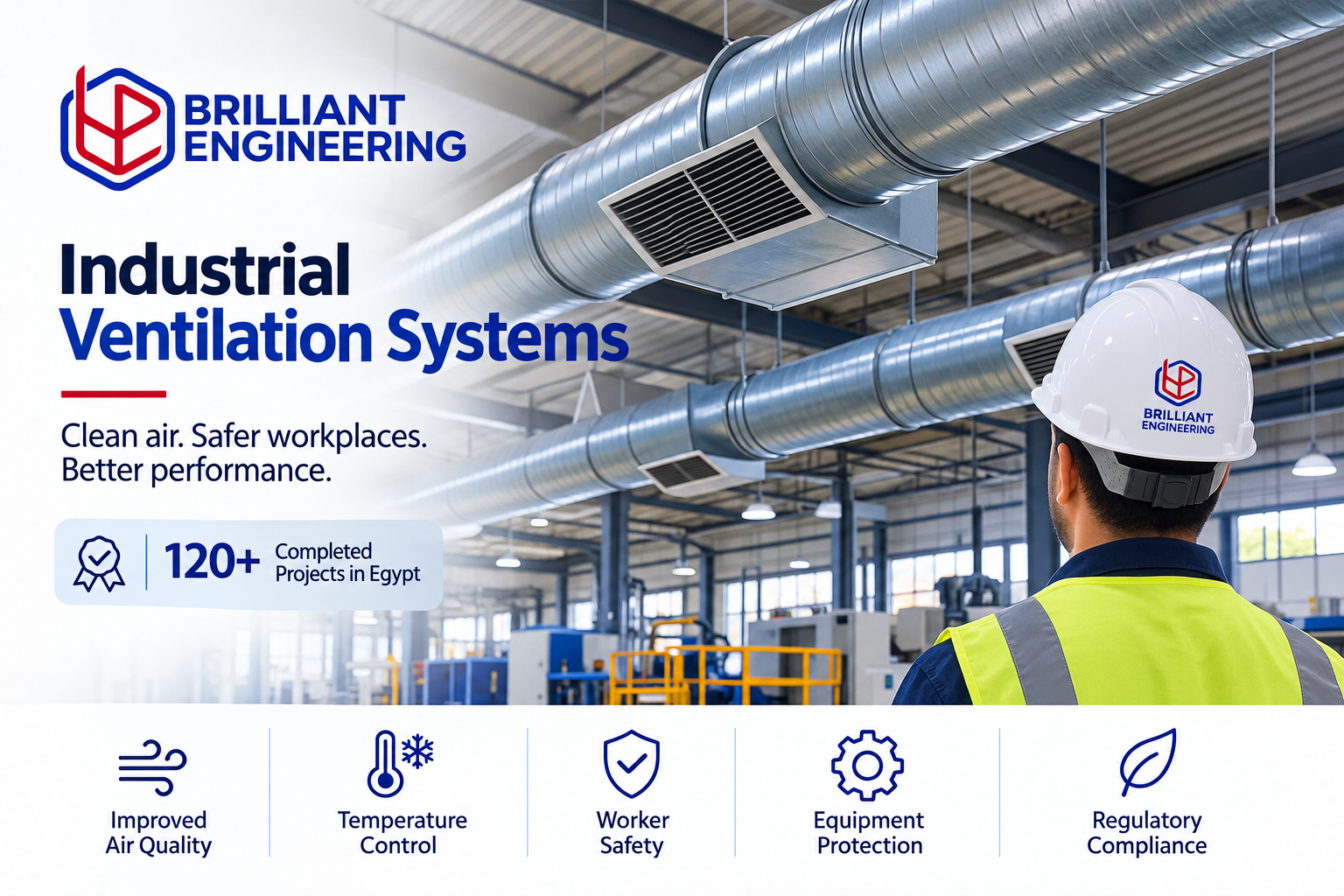
- Industrial Ventilation — 120+ completed projects
- Electrical Works — complete power distribution and control systems
- Firefighting Systems — designed to NFPA and Egyptian Civil Defense standards
- Plumbing and Drainage — complete water systems for commercial and industrial facilities
- Control Panels — custom-designed and manufactured panels for all applications
- Turnkey MEP Projects — complete design, supply, installation, and commissioning
Our team handles everything from initial design and technical submittals through installation, testing, and formal handover — with a 0% error rate and full after-sales support.
Ready to discuss your MEP project? Contact Brilliant Engineering today for a free consultation.